Why The Order Of Hires Is A Budget Decision
Most homeowners think of hiring an architect, an interior designer, and a builder as three separate errands. On a luxury home project they are one decision with three parts, and the sequence you make them in determines how much of your budget will be spent building the home versus spent correcting decisions made in isolation.
The pattern we see over and over is not a lack of talent on any one seat. It is talent working from different assumptions, at different moments, without a shared plan. That is a sequencing problem, and it is the easiest one to fix on the front end.
The Traditional Sequence, And Why It Costs You
The default path most homeowners drift into looks something like this:
- Hire an architect and develop a full set of drawings
- Send those drawings out to three builders for competitive bids
- Pick a builder based on the number at the bottom of the page
- Hire an interior designer somewhere in the middle of construction to help pick finishes
It sounds orderly, and on a modest project it can work. On a luxury renovation or custom home, it introduces a category of avoidable cost that shows up as change orders, rework, and awkward compromises later. Every one of those problems traces back to a specialist being asked to weigh in after the decisions in her lane have already been made.
What An Integrated Sequence Looks Like
The alternative is not complicated. It is bringing the team into the room earlier and letting the disciplines inform each other while the drawings are still soft. On our projects that typically looks like the Provision Method: architect, interior designer, and builder engaged during pre-construction, working from one budget, one schedule, and one set of decisions.
The order still exists, it just overlaps. Nobody is finishing their piece and throwing it over the wall to the next person. The result is a plan that is buildable, budgeted, and detailed before the first trade arrives on site.
Bring The Builder In With The Architect
The single highest-leverage move on a luxury project is bringing the builder in while the architect is still exploring options. She can price a roofline as it is being drawn, flag a structural assumption before it becomes a beam, and warn the design team about a foundation condition that would blow the budget if left in the plan. That kind of live feedback is worth more than any post-hoc value engineering exercise.
This is the core argument for a design-build model over a traditional bid-build one. In a bid-build, the builder is inheriting a set of drawings she had no input on. In design-build, she helped shape them.
Bring The Interior Designer In With The Architect
The interior designer is often treated as the finishing touch, brought in to pick tile and paint after the structure is set. That is a misuse of her expertise, and it is the second most expensive ordering mistake on a luxury project. She should be shaping the interior architecture alongside the architect, not decorating around it later.
A few examples of decisions she should be at the table for:
- Window placement and sill heights so furniture fits
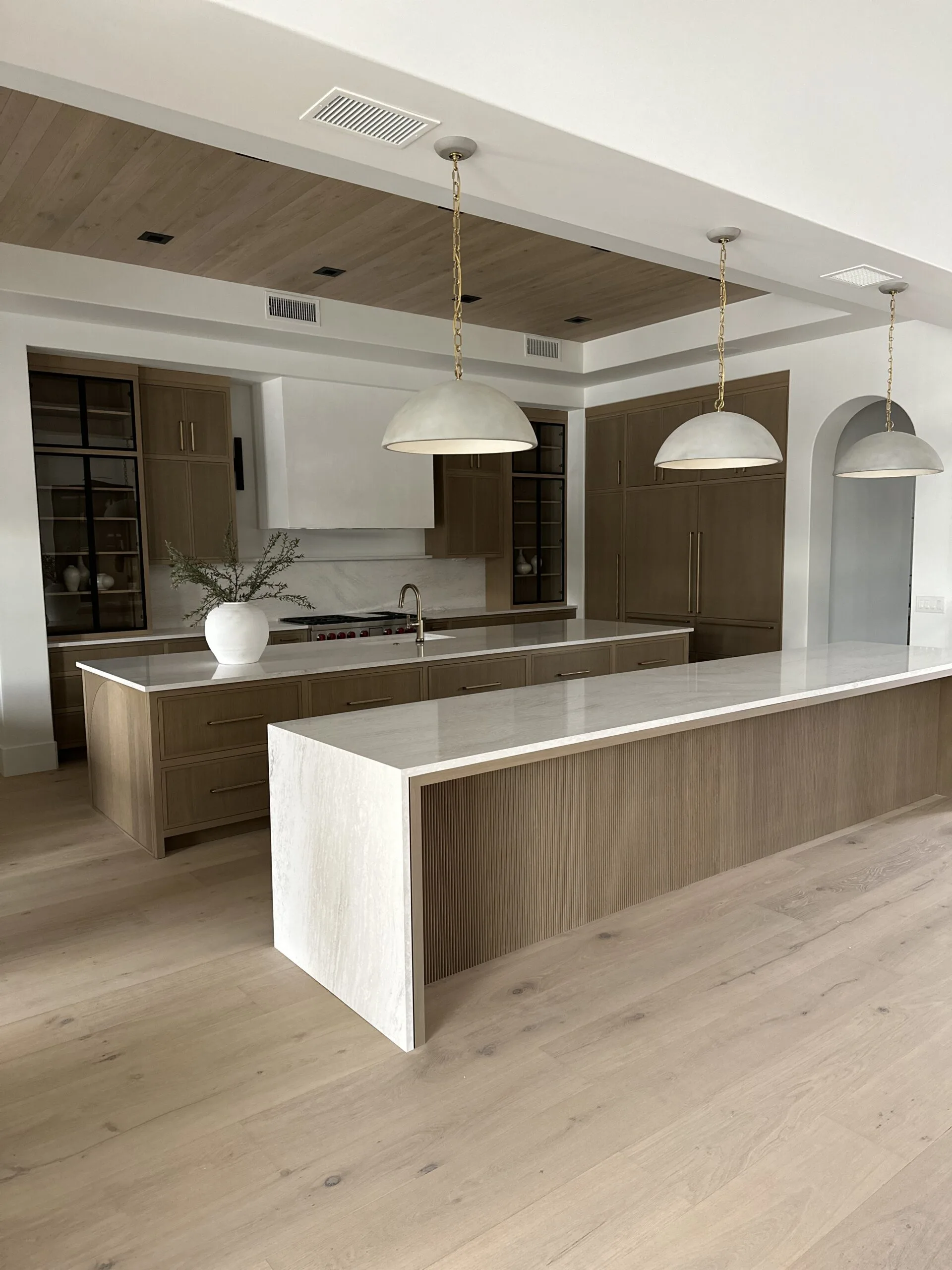
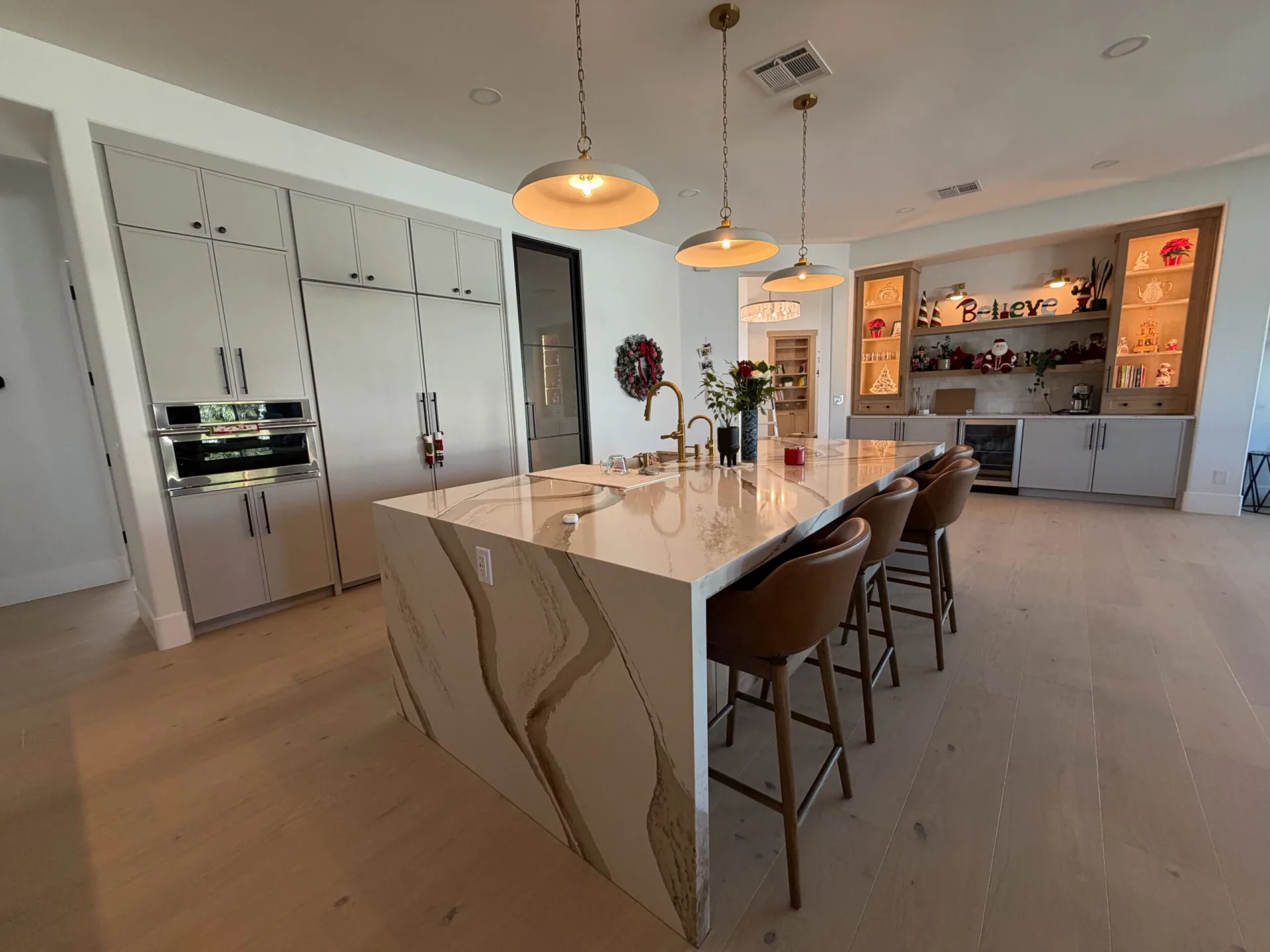
- Ceiling detail, beam runs, and lighting layout as one integrated composition
- Plumbing wall depths in wet rooms so the vanities and tubs you want will fit
- Millwork opportunities that get lost the moment framing is signed off
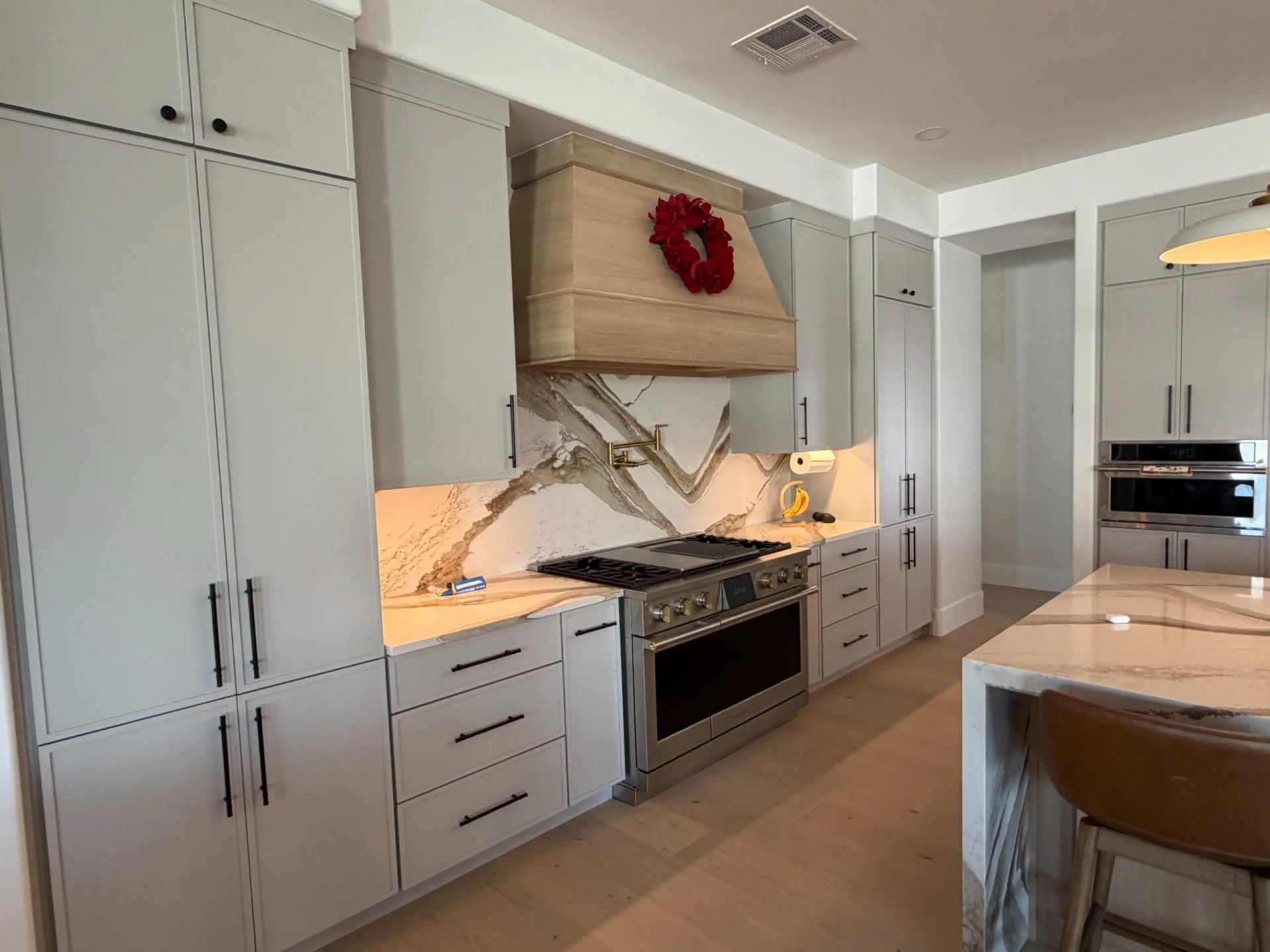
- Appliance and door swing coordination that dictates cabinetry layout
None of those are finish-selection decisions. They are architectural decisions that only look like finish decisions in hindsight, and she is the one holding the interior vision that ties them together.
What Order The Homeowner Experiences
On an integrated project, the homeowner's experience of the team coming together is less linear and more collaborative than the traditional sequence suggests. A rough version of the flow:
- Discovery conversation with the builder about scope, budget, and site
- Architect and interior designer engaged together for programming and concept
- Builder pricing the work in parallel with the drawings, not after
- Selections narrowed and locked during pre-construction, not on site
- One unified budget and schedule presented before contracts are signed
The homeowner is having fewer meetings, not more, because the specialists are talking to each other between those meetings instead of sending revised drawings back and forth.
How Ordering Errors Show Up On Site
You can usually tell, walking a project mid-construction, which team was sequenced correctly and which was not. The tells are consistent:
- Rough-in mistakes that require opening drywall to relocate plumbing or electrical
- Cabinetry that has to be scribed awkwardly to a wall nobody measured with cabinetry in mind
- Lighting that fights the ceiling detail because the two were designed independently
- A tile decision that requires a curb the framer did not build
- An appliance that no longer fits because the panel-ready spec came after the opening was framed
Every one of those becomes a change order. Not because anyone did poor work, but because the wrong specialist was asked the question at the wrong moment.
Ordering On A Renovation Versus A New Build
On a full-home renovation, the order matters even more than on a new build, because the existing house is the wildcard. Only a builder walking the property with the designer can flag which walls hide structure, which ceiling has room to lift, and which plumbing run will be prohibitive to move.
On a custom home, the order matters because the lot and the climate are the wildcards. In Arizona that means orientation, shading, indoor-outdoor transitions, and mechanical loads all have to be considered by the whole team before drawings get set. Sequencing the hires wrong is how those constraints become expensive surprises.
Where Interior Design Leadership Belongs
A quiet but important distinction: interior design leadership is not the same as decorating. She is not choosing throw pillows, she is holding the interior architecture and the material story across every trade for the length of the project. That is a leadership seat, and it belongs in the room from day one alongside the architect and the builder, whether the project sits in Scottsdale, Paradise Valley, Chandler, or anywhere else across the Valley.
We usually see the return on that decision most clearly in the last thirty percent of the project, when a house designed with an integrated interior lead finishes cleanly, without a scramble of substitutions and field decisions to make the pieces fit.
What To Ask Before You Hire Anyone
Before you sign with any single specialist on a luxury project, a short list of questions to ask each of them:
- At what stage do you typically start collaborating with the other disciplines?
- How is the budget maintained across the design and construction handoff?
- Who owns the selections calendar during pre-construction?
- How are change orders originated, priced, and approved on your projects?
- Can you share a project where the team came together at the beginning versus one where it did not?
The answers will tell you more about how the project will feel than any portfolio image can.
The Short Version
Hire in isolation and you will pay for the assumptions each specialist made without the others in the room. Hire together, sequenced through an integrated pre-construction process, and the project runs on one plan instead of three. On a luxury home that difference shows up as fewer change orders, a tighter schedule, and a finished house that looks like one coherent idea rather than a series of compromises.