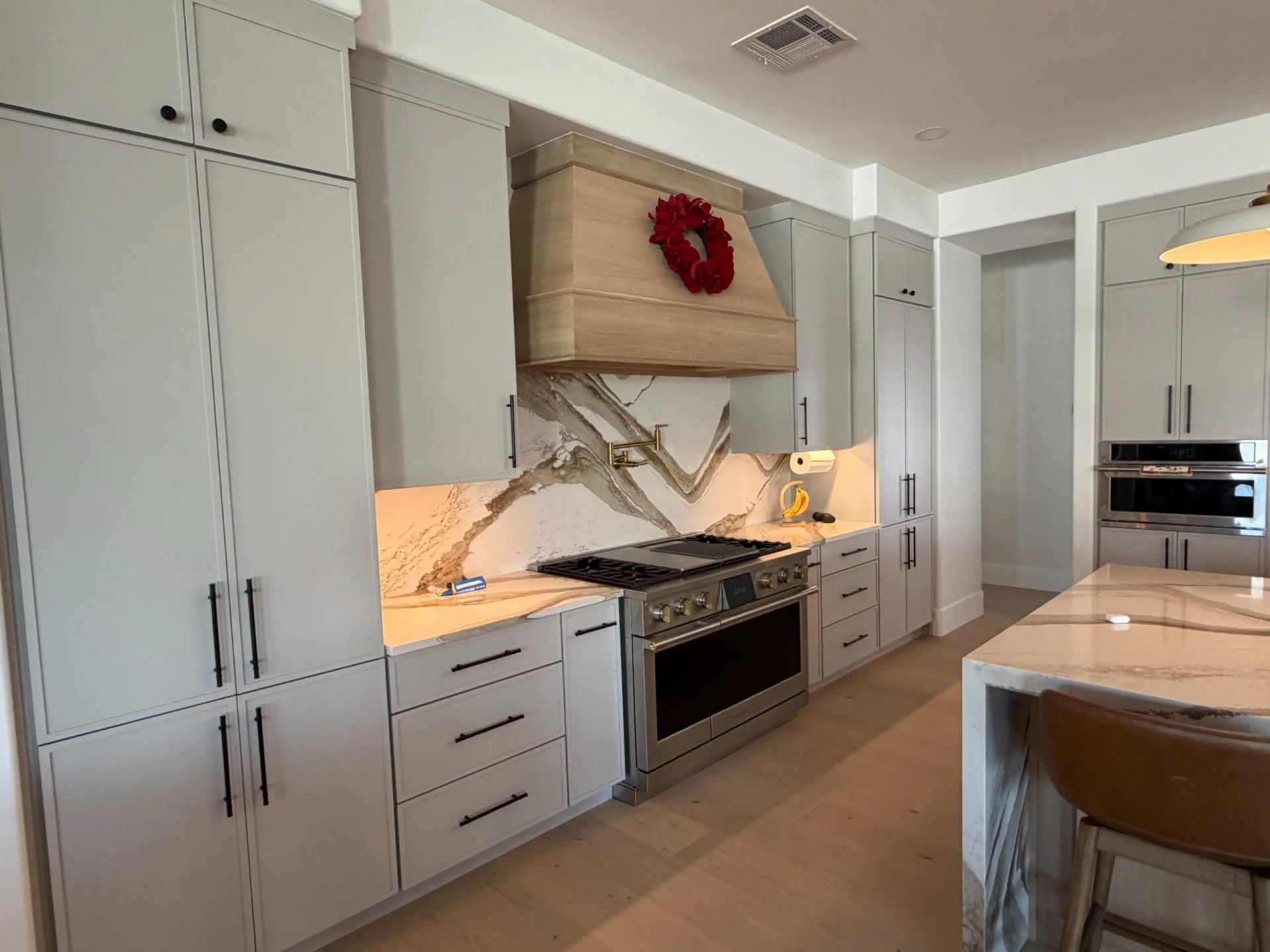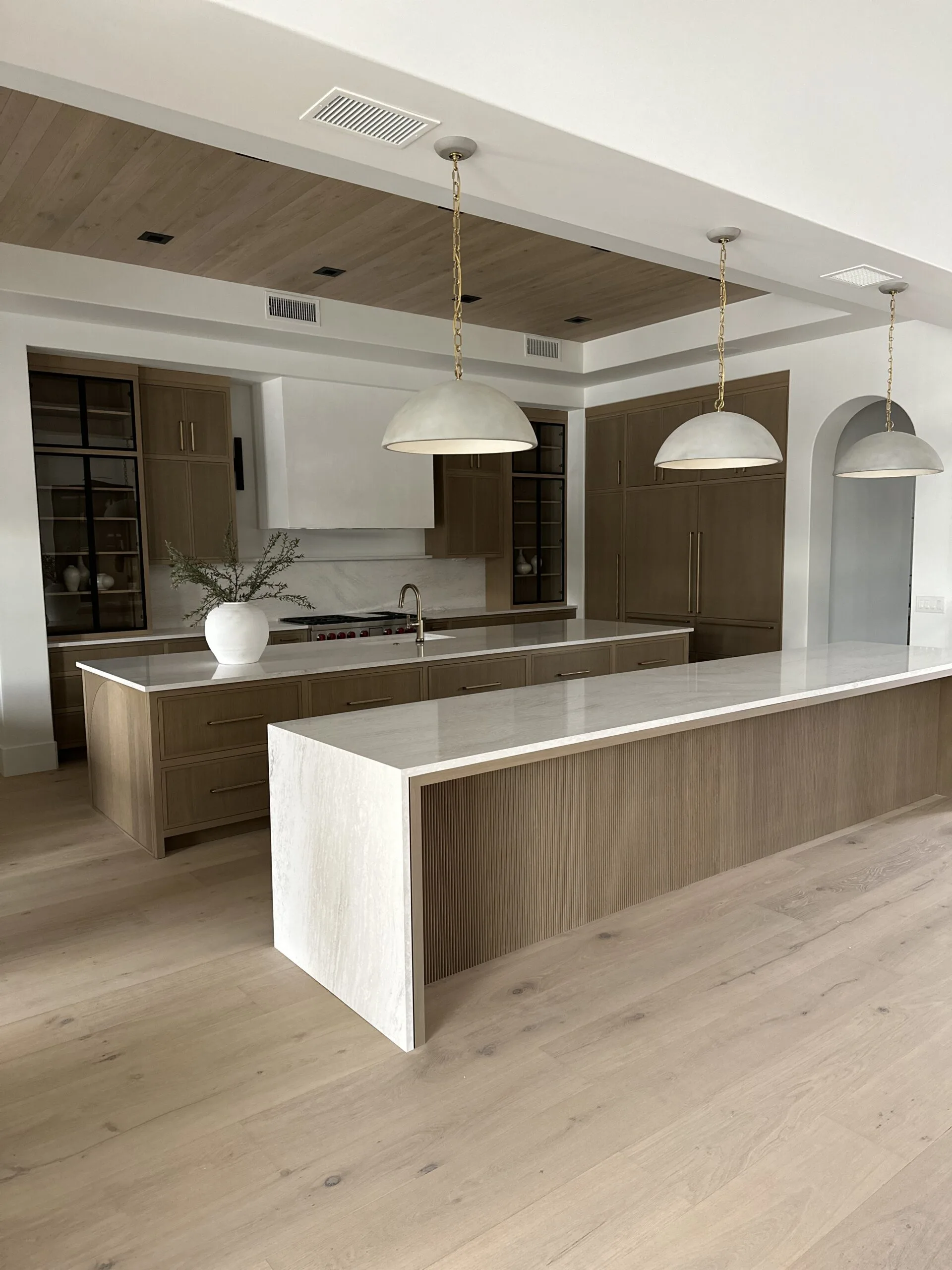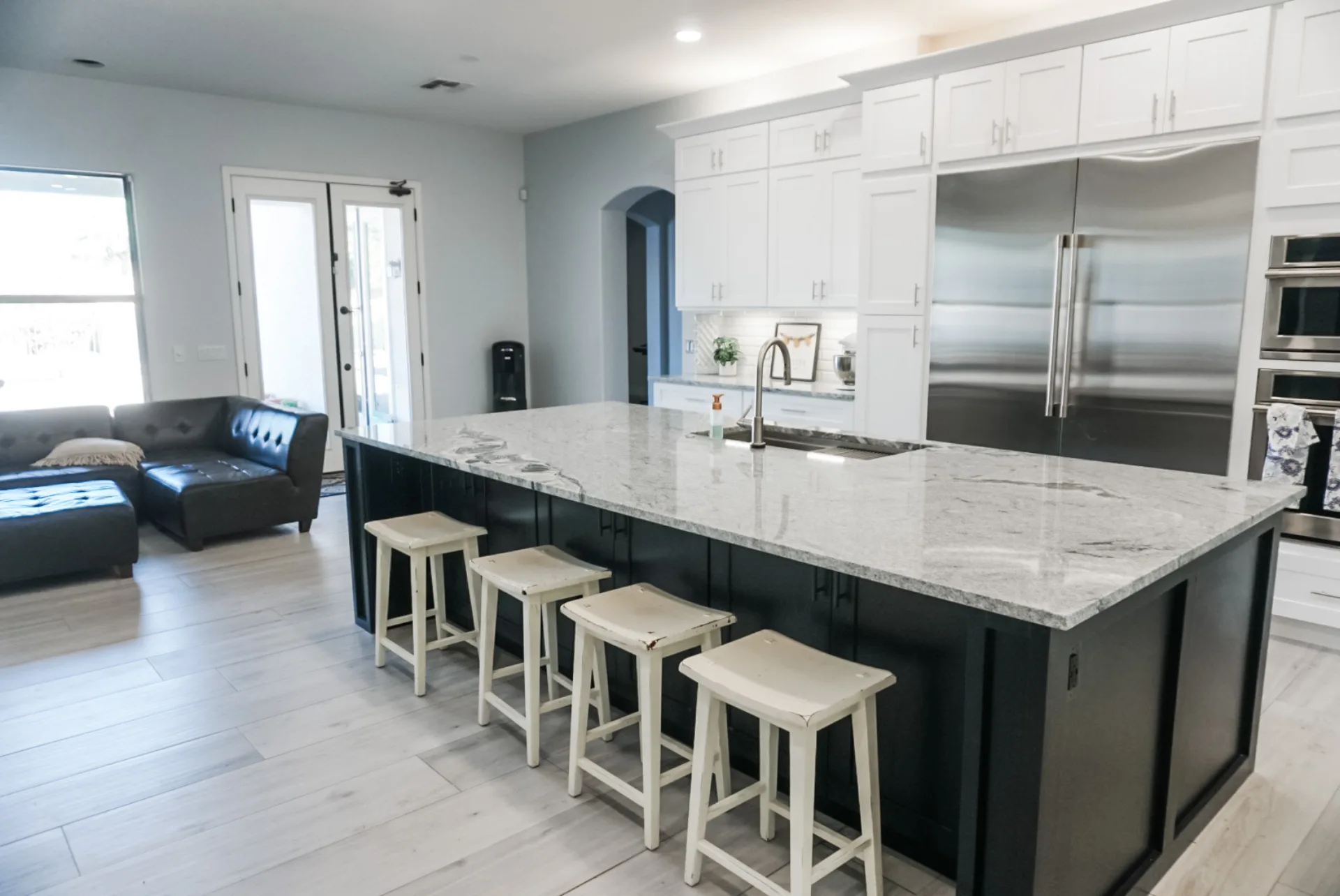
We have watched dozens of beautiful, well-intentioned projects arrive at our door with the same problem. Two years of design work, six figures spent on drawings, and a homeowner who is excited about what they have created. Then the first real construction estimate comes back thirty or forty percent over what they thought they would spend.
The drawings are not wrong. The architect is not bad. The homeowner is not naive. What is missing is the voice in the room that knows, in real time, what a fourteen foot island costs to support, what a twenty foot stacking glass door does to the structural plan, and what the difference is between a beautiful detail and a beautiful detail that is also buildable inside a reasonable budget.
That voice is the builder. And for most luxury home projects, the most valuable thing the builder can do is be in the conversation before the drawings get expensive, the same conversation our luxury home builder team has on nearly every project we take on.
The Traditional Sequence And Where It Goes Wrong
The way most homeowners are taught to approach a custom home or major renovation looks something like this: interview architects, hire one, develop plans for six to twelve months, then send those plans to contractors for competitive bids. It is a logical sequence on paper. It assumes that design and cost are separate disciplines that can be handed off cleanly.
They are not. Almost every meaningful design decision is also a cost decision. The shape of the roof. The depth of the cantilever. The ceiling height in the great room. The choice between a single ridge beam and a structural truss system. By the time those decisions are baked into a stamped set of drawings, changing them costs months and tens of thousands in redrawing fees, and the budget conversation is happening with a contractor who has no equity in the design.
What Changes When A Builder Is Involved Early
It is not that early builder involvement makes design cheaper. The most ambitious version of your project might still cost what it costs. What changes is that you find out earlier, when it is still inexpensive to make decisions about it.
A few specific things we have seen happen when we are in the room from the start:
Structural Realities Show Up In The First Sketch
The architect is drawing a kitchen with a twenty-eight foot opening to the great room. We can mention, in the meeting where it is first proposed, that supporting that opening will require a flush beam, which means giving up two feet of ceiling height through the kitchen. The architect either solves it, with a different beam strategy, a different opening width, or a dropped soffit treated as a feature, or the homeowner makes an informed call. Either way, the decision happens in five minutes, not five months.
Material Assumptions Get Tested Against Real Pricing
A specification that looks reasonable on paper, say a particular stone finish for a primary bath, might be running three or four times its historical price due to quarry constraints. We see those signals on other jobs. We can tell the design team early, while there is still room to either commit to the cost or pivot to a comparable material, the same tradeoffs we walk through in our guide to finish selections before construction.
Permit And Code Constraints Stop Being Surprises
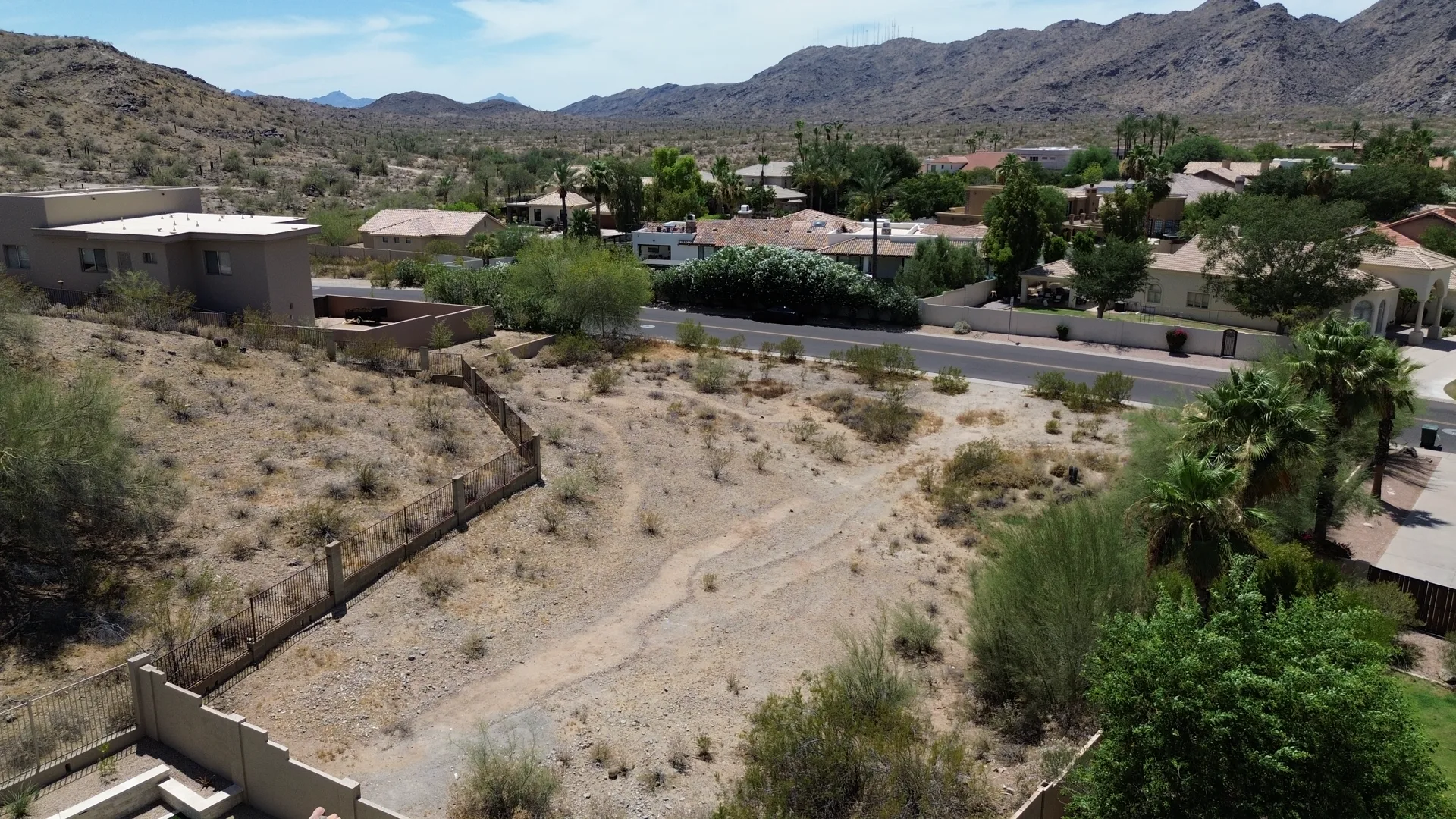
Setbacks, height restrictions, view corridor easements, and HOA architectural review requirements. Every Arizona submarket has its own quirks. A builder who works in Paradise Valley or Scottsdale or Chandler regularly knows where the gotchas live and can flag them before they become redraws.
Trade Partners Can Weigh In On Details That Matter
On a recent project, our mechanical contractor reviewed early floor plans and pointed out that the proposed location of the air handler would force a long, inefficient duct run to the primary suite. The architect was glad to know in week three, not month nine. A small relocation early avoided a comfort problem that would have been nearly impossible to fix after framing.
How This Plays Out On Renovations
Renovations raise the stakes on early builder involvement rather than lowering them. Existing structure, hidden framing, and outdated mechanical systems all constrain what a design can realistically do, and none of that is visible in a floor plan sketch. A builder who has opened enough walls in Valley homes built across different decades can flag the likely surprises before they turn into a demolition day discovery.
That is one of the reasons our renovation projects follow the same integrated sequence as our new construction work, with the builder reviewing plans alongside the designer well before a permit is submitted.
Won't The Architect Feel Encroached On
Some will. We are not naive about that. The traditional dynamic in residential design positions the architect as the homeowner's primary advocate and the builder as a price-driven counterforce, and there are still architects who design that way.
The architects who do their best work, in our experience, welcome the builder early. It gives them honest constraints to design within. It surfaces buildability problems while they are still cheap to solve. And it lets the architect spend their creative energy on the parts of the project that benefit most from it, rather than on redrawing details that did not pencil.
The best collaborations we have had look like this: one homeowner, one architect, one interior designer, one builder, all in the room from week one, treating the project as a shared problem rather than a sequence of handoffs. Our own interior design process is written around that same idea.
What Early Means
Ideally, the builder is involved before schematic design is finalized, meaning before the basic shape, footprint, and key proportions of the home are locked. At minimum, the builder should be in the conversation before construction documents are drawn, because that is the most expensive set of drawings to redo.
If you are already past construction documents, there is still value in bringing a builder in for a pre-construction review before bidding the work. But the advantage narrows rapidly the later in the process you arrive.
The Honest Take
This is not a sales pitch dressed up as advice. We believe that the homeowners who have the best experience on luxury home projects are the ones who treat builder involvement as an early design tool, not a late procurement step. Whether that builder ends up being us, or another firm whose model is structured the same way, matters less than the structural decision to involve someone with construction expertise in the conversation when there is still time to use it.
If you would like to talk through where you are in the planning process and whether early builder input would help, our team is happy to have that conversation with no strings attached. Reach out and we will walk through your project together. It is often the most valuable hour of a homeowner's pre-construction year.