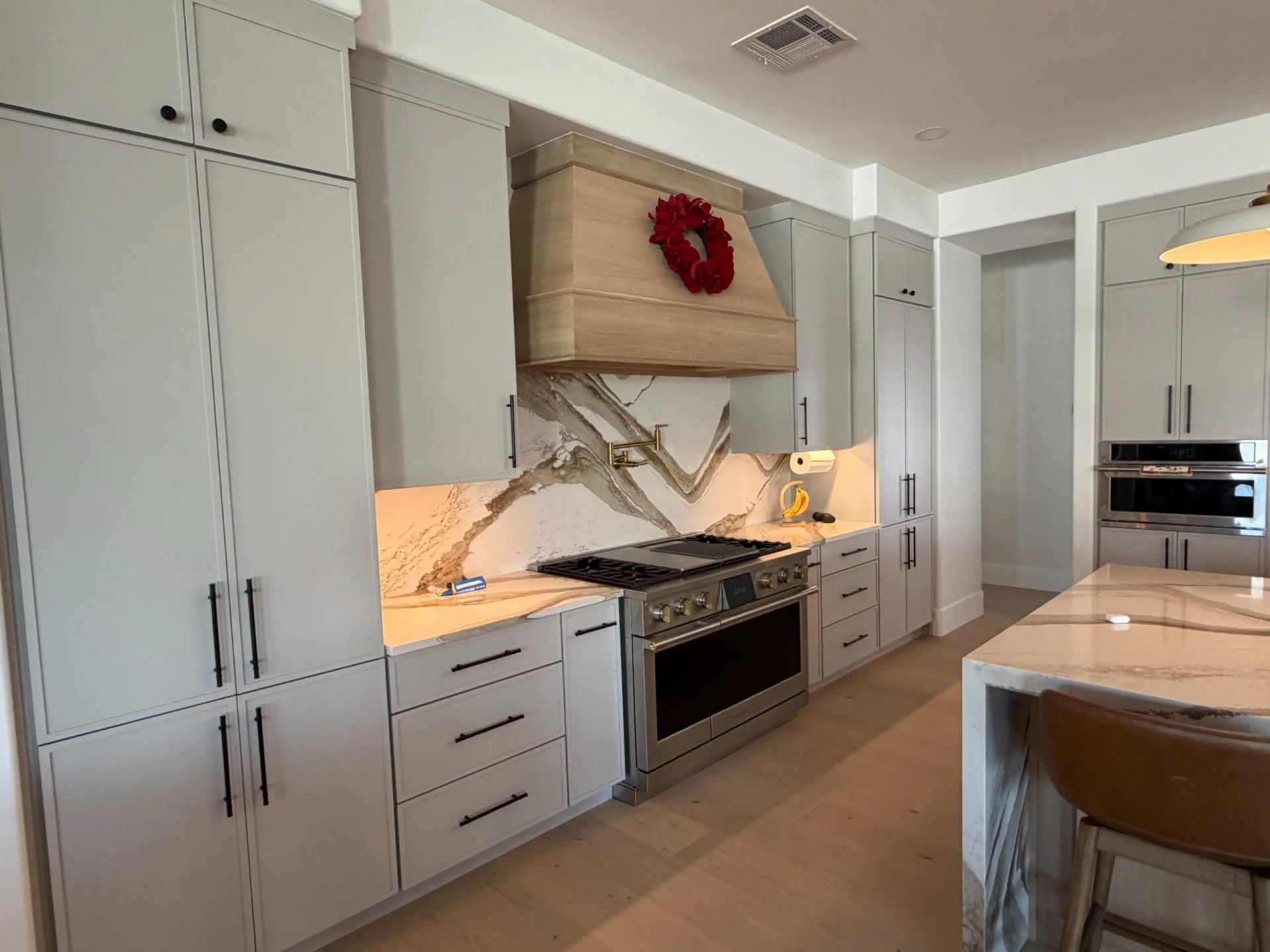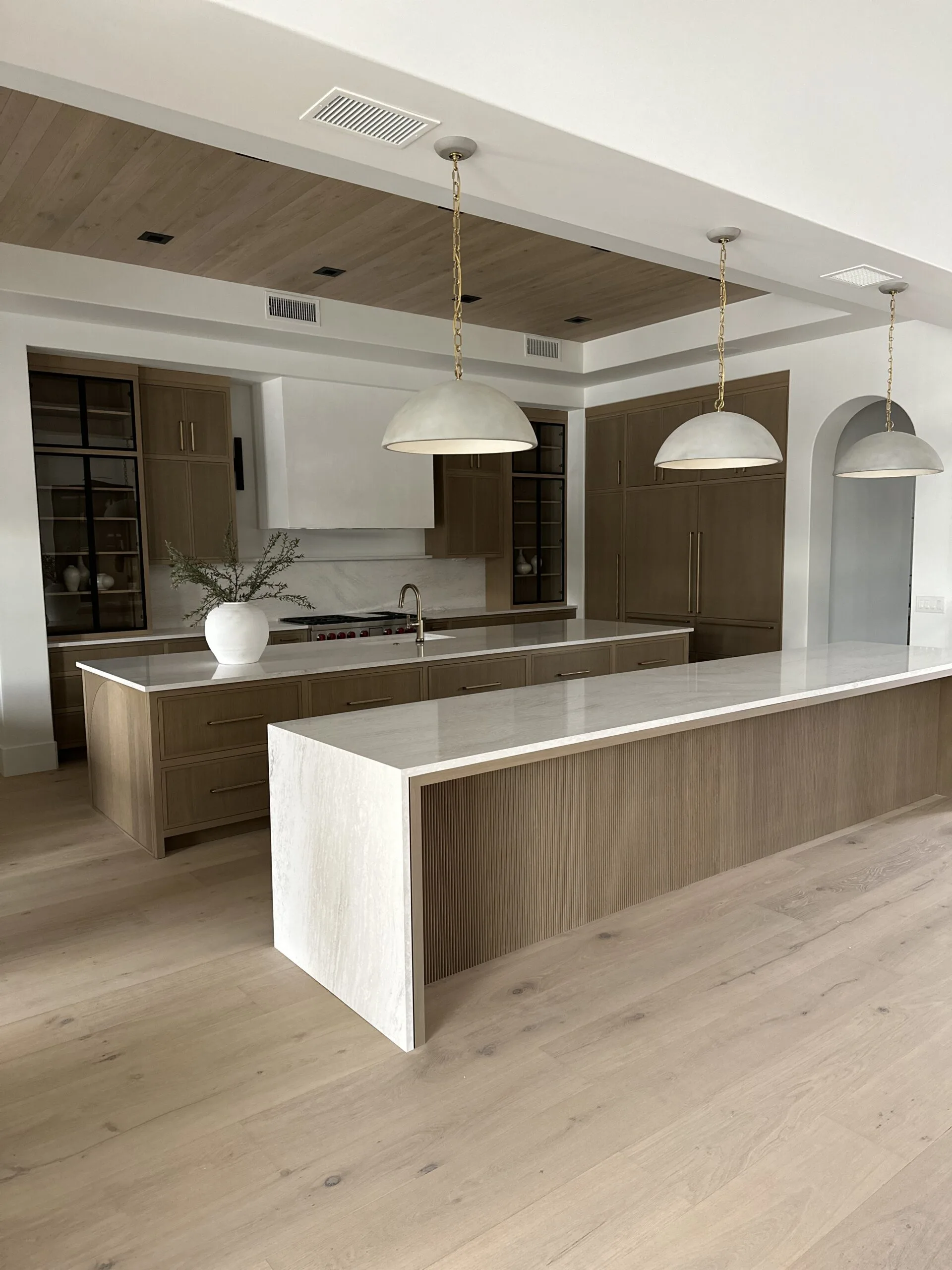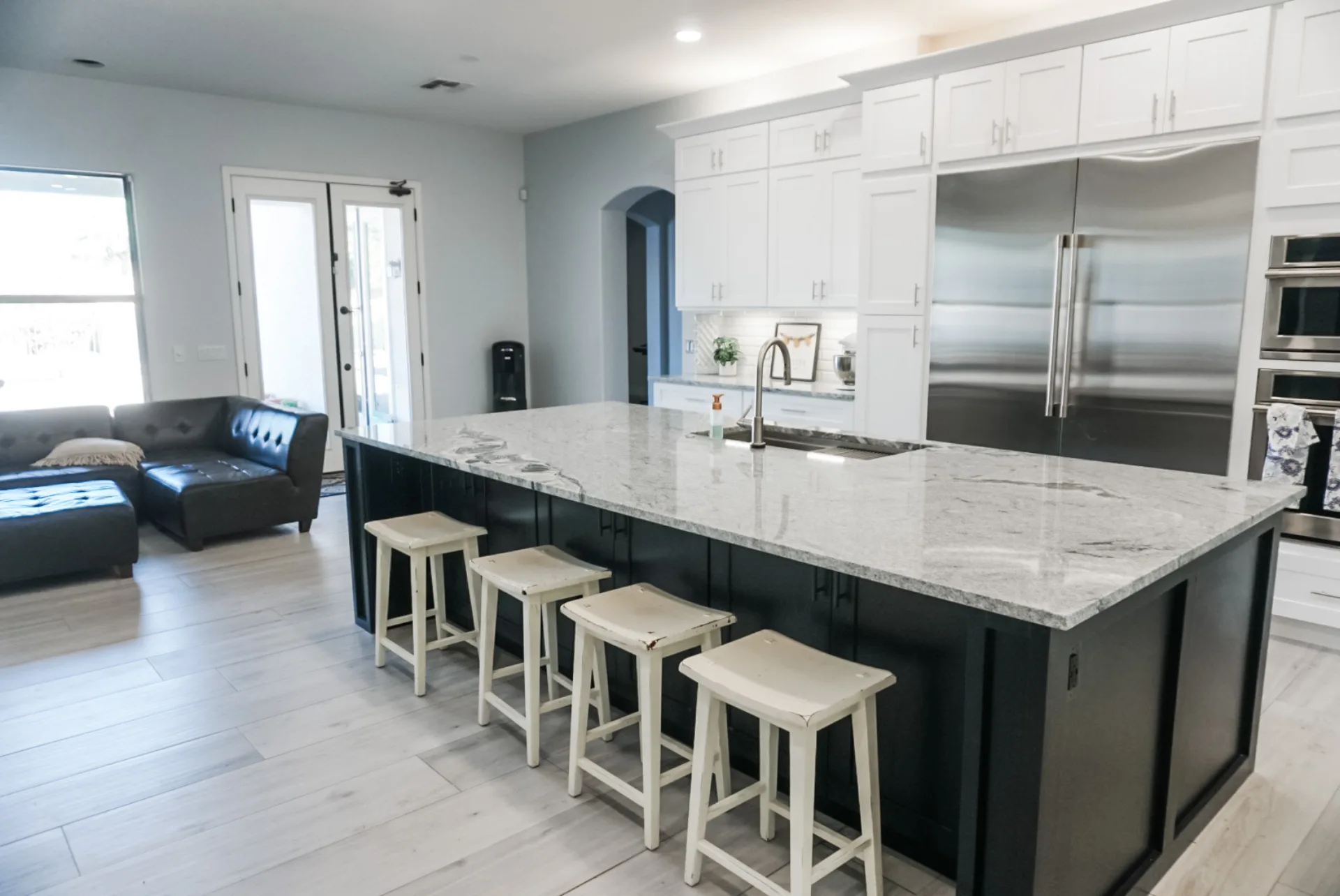

Walk through a finished kitchen in a standard remodel and a luxury renovation, and the differences on first glance can be subtle. Both might have a beautiful stone, custom looking cabinets, integrated appliances, a thoughtful lighting plan. The closer you look at the way the cabinet shadow lines align, how the stone meets the wall, and what is behind the drywall, the more obvious the difference becomes.
But the deeper truth is that the differences you can see in a finished room are downstream of decisions made months before construction starts. Here is where the real separation happens.
It Starts With How The Project Is Planned
A standard remodel typically starts with a homeowner describing what they want, a contractor scoping the work, and a price coming back within a couple of weeks. Selections happen as the project moves. Design changes are handled as they come up. There is a plan, but it is loose, and most of the coordination happens on the fly.
A luxury renovation starts with weeks or months of pre-construction: design, selections, structural and mechanical review, and a detailed scope and schedule built before a single demo permit is pulled. The cost of that pre-construction is real, but it pays for itself many times over by eliminating the surprises that drive a standard remodel sideways.
The Specifications Are Written, Not Assumed
On a standard remodel, the scope usually lives in a few paragraphs and a line item budget. Remove wall between kitchen and dining, install new island, refinish floors. When the homeowner asks what is behind the line for kitchen island, the answer is whatever the contractor thought reasonable at the time.
On a luxury renovation, every assembly is specified. The cabinet construction. The drawer hardware tier. The depth of the island countertop overhang. The radius of every corner. The exact LED color temperature in the cove lighting. It takes longer to write. It costs more to draw. And it removes almost every misunderstanding from the construction phase.
The Trade Partners Are Not Picked On Price
A standard remodel runs on subs chosen primarily by cost and availability. Some of those subs are great. Many are fine. A few are why a kitchen reno is somehow on month six.
A luxury renovation runs on trade partners chosen over years for craftsmanship, reliability, and how they communicate when something goes wrong. They cost more. They show up on time. They take pride in what is not visible: what is behind the drywall, what is under the slab, what the next person to open this wall in twenty years will think when they see how it was framed.
Supervision Does Not Disappear After Demo
On a standard remodel, the supervisor, if there is one, is often running multiple projects at once and dropping in for a few hours per week. Day to day decisions get made by whoever is on site that morning.
On a luxury renovation, dedicated project management lives on the job. Decisions are made by people empowered to make them, and they are made in the context of the broader project plan. The cumulative effect of that supervision, with small judgment calls made hundreds of times over the course of a six or twelve month build, is most of why a luxury renovation looks and feels different in the end.
The Team Is Integrated, Not Handed Off
Standard remodels usually run as a relay race: designer hands off to contractor, contractor hands off to subs, subs hand off to the next sub. Every handoff is a place where something can be lost in translation.
The renovations we run as a design-build firm work differently. Architect, interior designer, builder, and key trade partners are in the same conversation early. When the plumber needs to know what countertop is being specified to set drain locations, the answer is already in the project. When the cabinet maker needs to know exact ceiling heights, they have them. Our interior design process is built around keeping that information flowing in one direction rather than getting rewritten at every handoff.
The Standard Is Set Early And Held
The single biggest predictor of how a renovation will turn out is the standard the team commits to in pre-construction and refuses to drift from when the project gets uncomfortable. Budget pressure, schedule pressure, the temptation to make it work with a sub-grade material. Every project has moments where the standard is tested.
On a standard remodel, the standard usually bends. On a luxury renovation, the team has the authority and the discipline to hold it. That, more than any material, is the actual difference. It is also the standard our renovation team holds itself to on every project we take on.
How To Tell The Difference Before You Sign
The clearest early signal is how a firm talks about the project in the first meeting. A firm running a standard remodel process talks mostly in finishes and price per square foot. A firm running a luxury process talks about sequence, specification, and who is accountable for what, before it talks about marble.
Ask to see a sample specification document and a sample project schedule. If a firm cannot produce either, the proposal you eventually receive is likely to be a standard remodel dressed up with a luxury price tag.
What This Means For You
If you are planning a major renovation and you find yourself frustrated by contractors who cannot explain the difference in their proposals, this is part of why. The visible spec, including finishes, fixtures, and square footage, is the easiest thing to compare. The invisible spec, including process, people, supervision, and integration, is most of what you are buying.
When you evaluate firms, ask how they handle pre-construction. Ask who will be on your job day to day. Ask what their trade partner relationships look like. The answers tell you more about what the renovation will feel like, and what the result will be, than any spec sheet. Our process page walks through how we answer those questions for every family we work with, and our reviews reflect what that standard looks like once the crew has left the site.