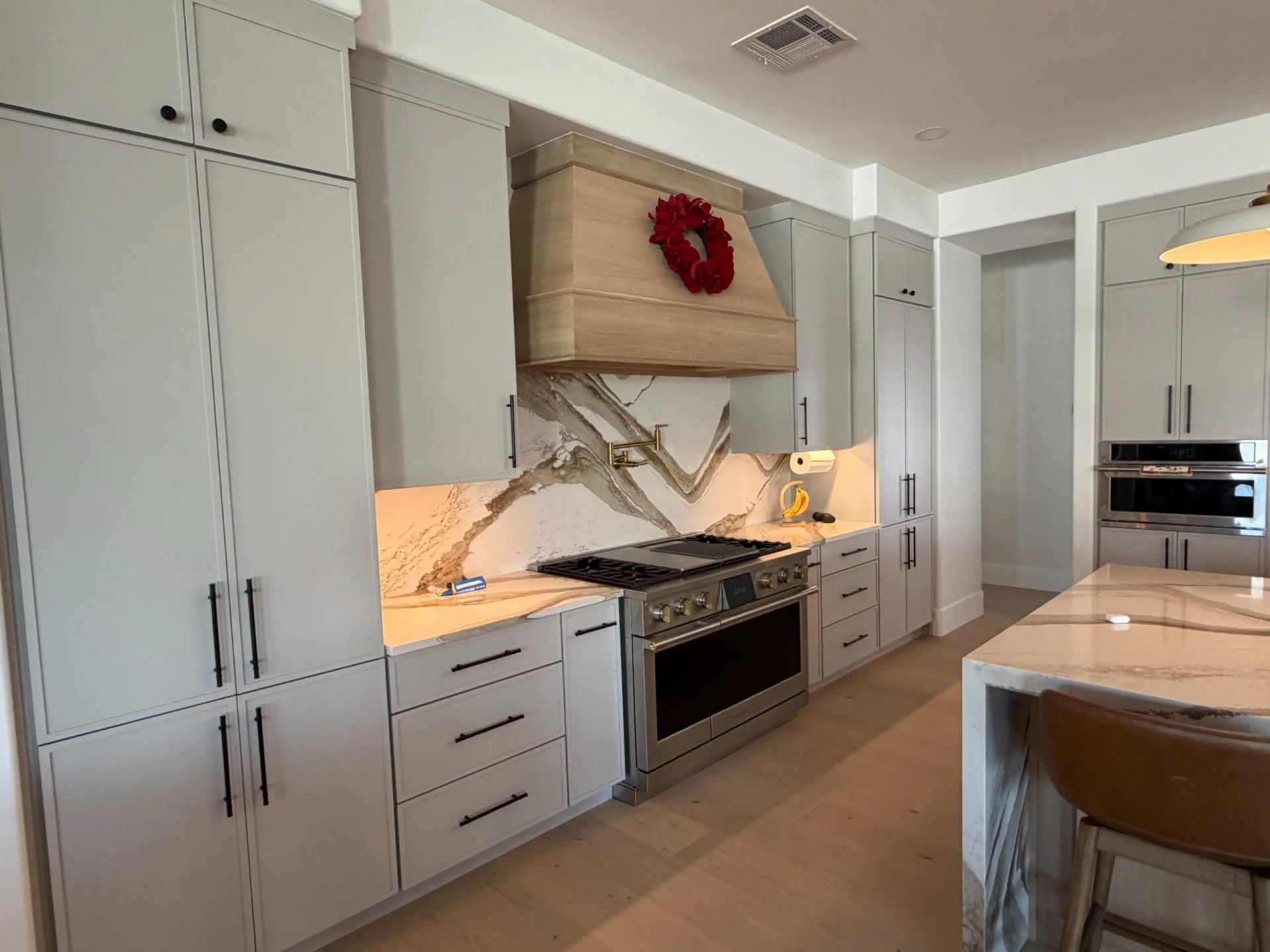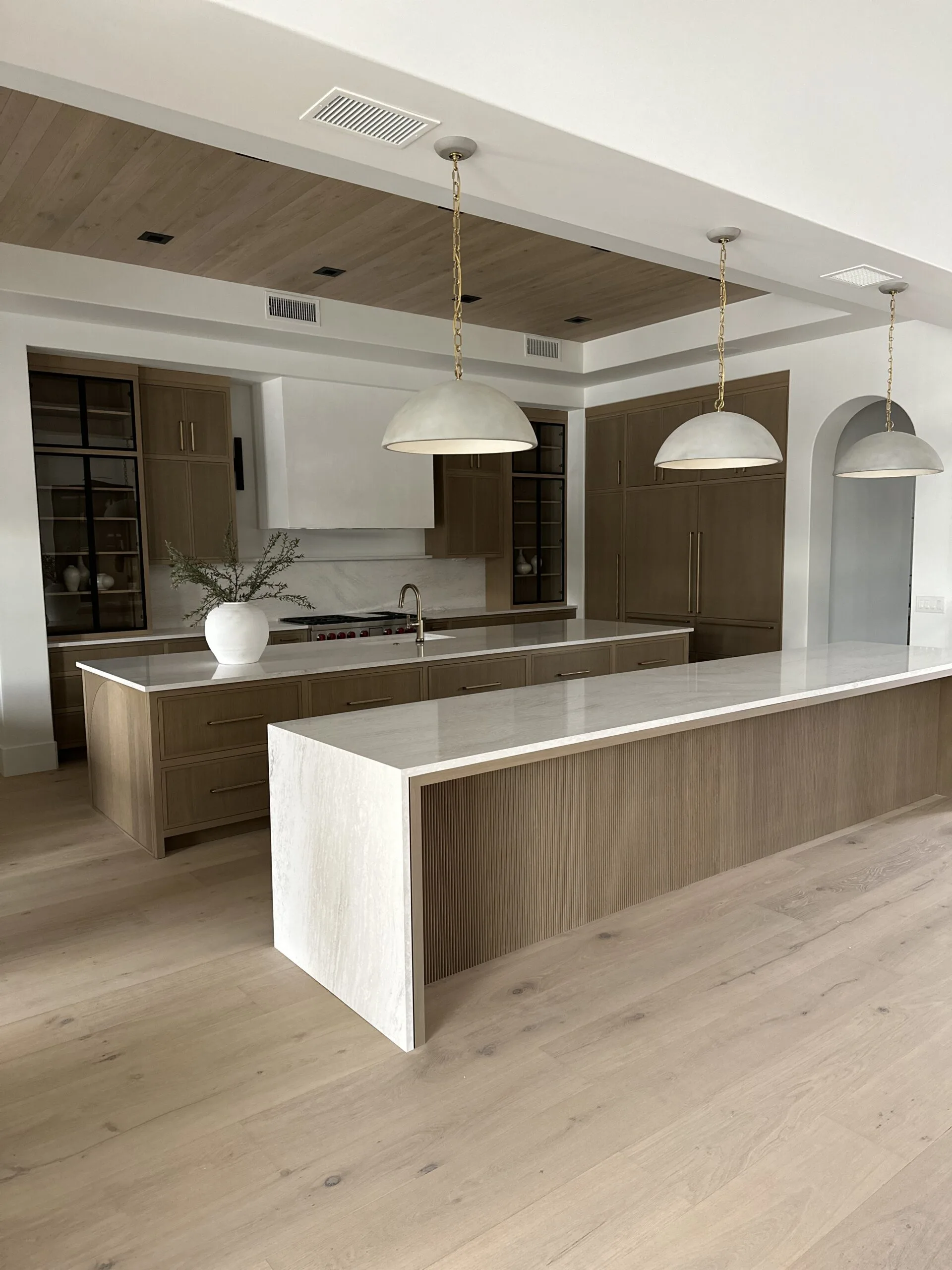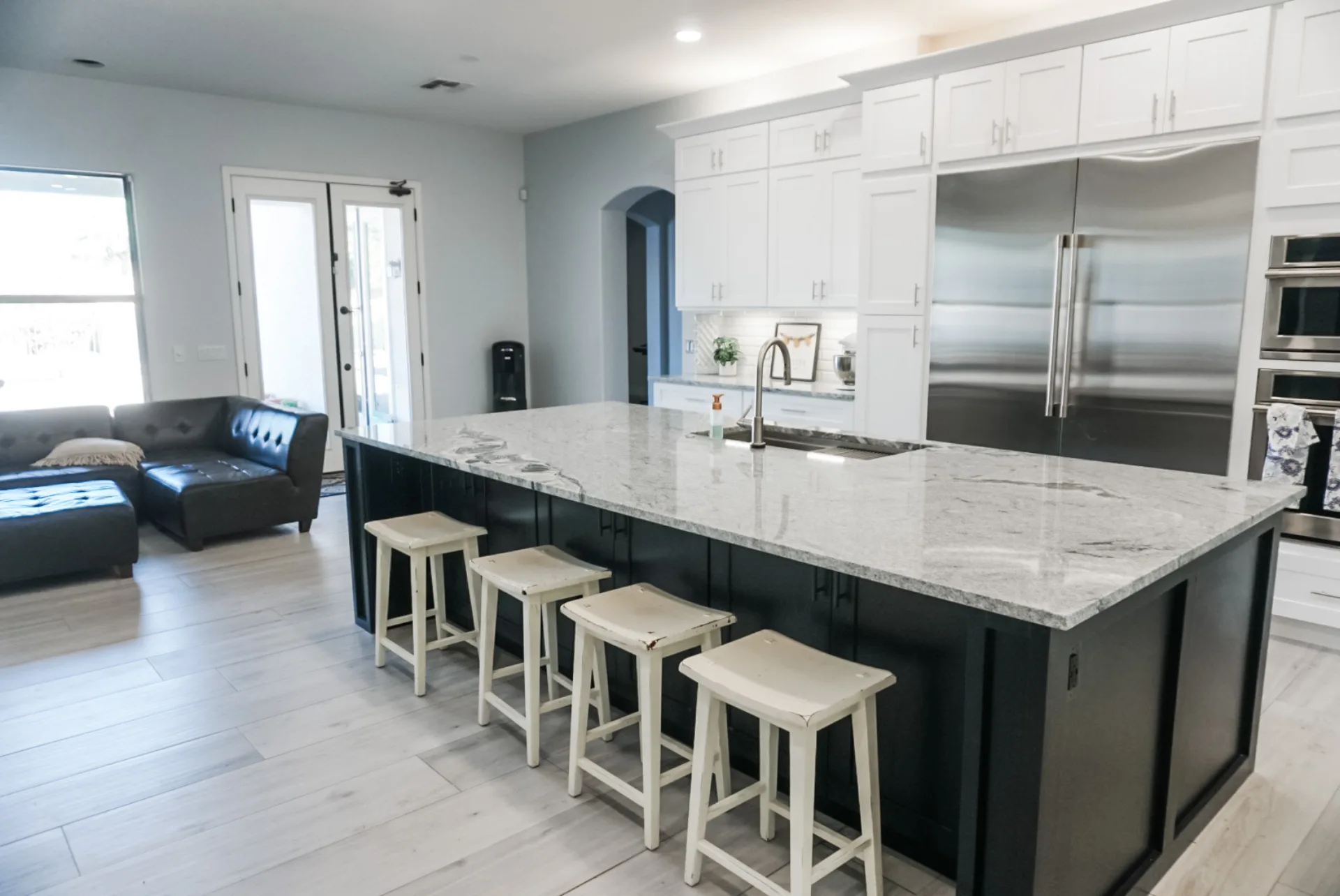
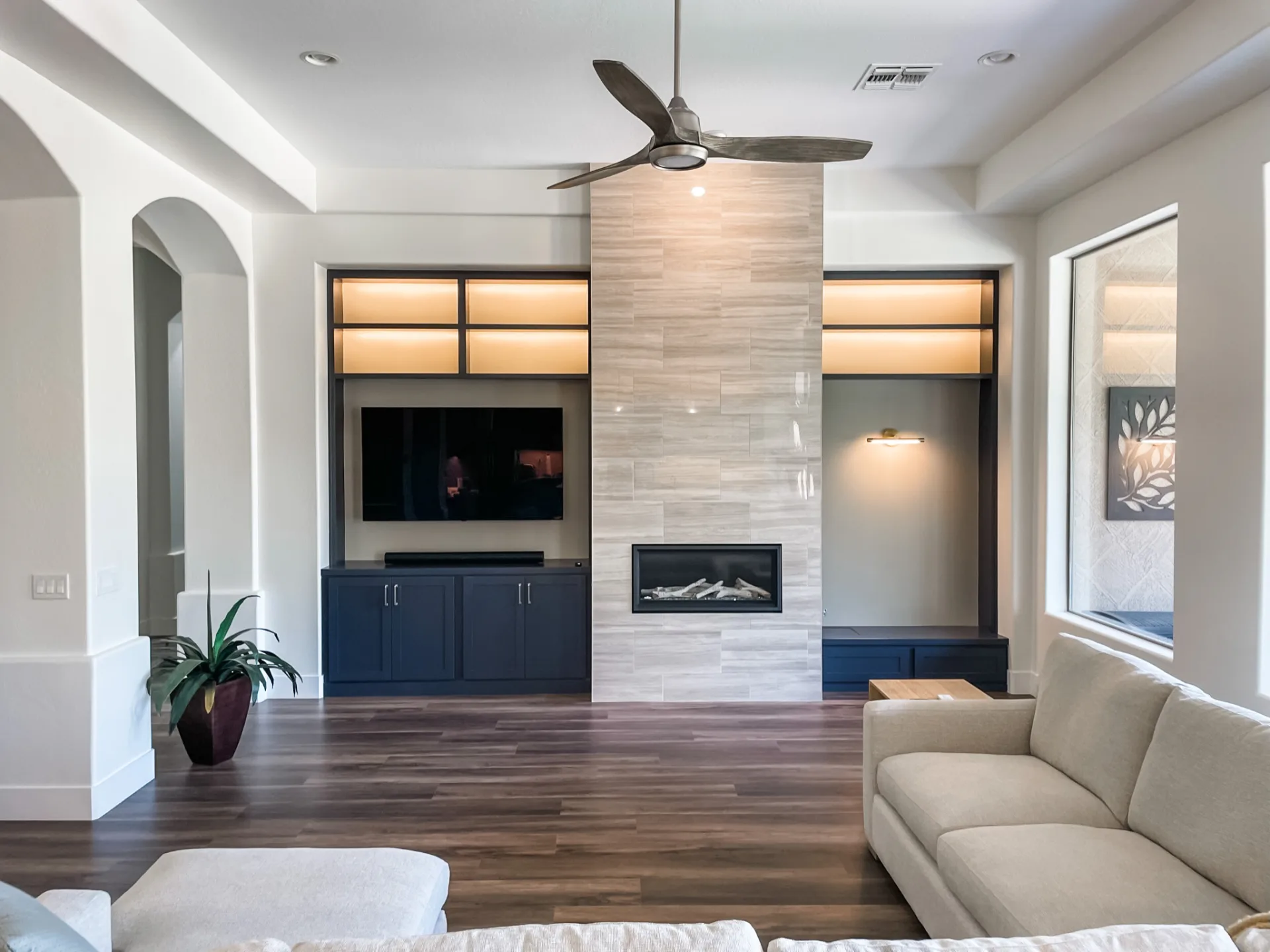
Walk into any handful of luxury homes across the Valley and the difference becomes obvious quickly. Some of them were designed. Some of them were decorated. The distinction is not about cost, and it is not about taste. It is about whether the important decisions were made in the right order, by the right person, at the right point in the project.
The two words get used interchangeably in casual conversation, and they should not be. They describe different disciplines, different training, and different roles in a home. Knowing which one your project needs is the first decision you get to make, and it is one of the highest leverage decisions in the entire process.
What An Interior Designer Does
Interior design is a discipline that spans space, structure, and finish. A designer evaluates how the home should function before evaluating how it should look. It is the discipline that shapes our whole design-build process, and it is where the highest leverage decisions on a luxury project get made.
The scope of a full service interior designer typically includes:
- Space planning, floor plans, layouts, circulation, sightlines, and proportion
- Architectural alignment on ceiling heights, cabinetry walls, lighting strategy, and window placement
- Material and finish selections across cabinetry, flooring, tile, stone, lighting, plumbing, paint, and hardware
- Documentation including drawings, renderings, specifications, and finish schedules a contractor can build from
- Coordination with the builder, the architect, and every trade through construction
- Furnishings, styling, and installation once construction is complete, when the scope includes it
The throughline is that the designer is involved before the home exists in its final form. They influence the bones of the space, not just what gets placed inside it. That is why our interior design process begins weeks before any finish selection happens. The layout, the ceiling heights, the cabinetry walls, the lighting strategy, and the material palette all deserve real attention before construction documents are finalized.
What A Decorator Does
A decorator focuses on the layers that sit on top of finished construction. Furniture, fabrics, art, accessories, window treatments, and styling. The home is already framed, finished, and ready to live in. The decorator's job is to make it feel complete, considered, and personal to the family that lives there.
It is real work, and good decorators are worth what they charge. But it is a narrower scope than design, and it happens later in the project lifecycle. Hiring a decorator when the project needs a designer is a category mistake, and it usually shows up in the finished home as a series of small compromises that no amount of styling can rescue.
How To Tell Which One You Need
Two questions usually resolve the answer quickly:
- Are you changing the structure, layout, cabinetry, or finishes of the home?
- Will multiple rooms need to coordinate visually and functionally with each other?
If the honest answer to either question is yes, the project needs a designer. If you are moving into a finished home that is already right for the family and want help furnishing and layering it, a decorator is the right call. Some firms, ours included, handle both ends of that spectrum, but it is worth being precise about which one you are buying.
The Cost Of Getting The Category Wrong
The most common failure mode we see is a family that renovated without design, finished the construction, and then hired a decorator to make the result feel right. The decorator does what they can, but the bones of the home are already set. Awkward cabinetry can be furnished around, but it cannot be undone. A poorly placed light fixture stays poorly placed. A cased opening framed at the wrong dimension stays the wrong dimension.
The decorator is being asked to solve problems that only design could have solved. It is the same failure mode we cover in more depth in how interior designers prevent expensive construction mistakes, and it is one of the reasons we advocate for bringing design in before an architect's plans are stamped.
The reverse mistake, hiring a designer for a project that is decoration scope, is far less damaging. It is an over specification problem rather than a structural one. The family may spend more than they needed to, but they do not end up living in a house whose bones are set against them.
Why The Order Of Hires Matters
On a luxury renovation or a ground up custom home, the order in which the team is hired is usually the single largest lever on the project's outcome. Design first, then construction, is a completely different experience from construction first with design brought in to react.
The families we see happiest at move in tend to have done a few things the same way:
- Hired the interior designer at the same time as the architect and builder, not after
- Committed to a real pre-construction phase before framing started
- Treated finish selections as part of design, not as a shopping trip after the fact
- Held one team accountable for the coordination between design and construction
If you are weighing a full renovation or a new build across the East Valley, our teams handle projects from Chandler and Gilbert up through Scottsdale and Paradise Valley. Getting the order of hires right is usually the difference between a home that feels resolved and one that always feels almost.
The Bottom Line
Interior design shapes the home. Decoration furnishes it. The two are sometimes handled by the same firm, often by different ones, and they are almost always confused for each other. Knowing the difference is the first step in hiring the right help for the project you have.
If a plain conversation about which one fits your project would be useful, our interior design team is a good place to start.