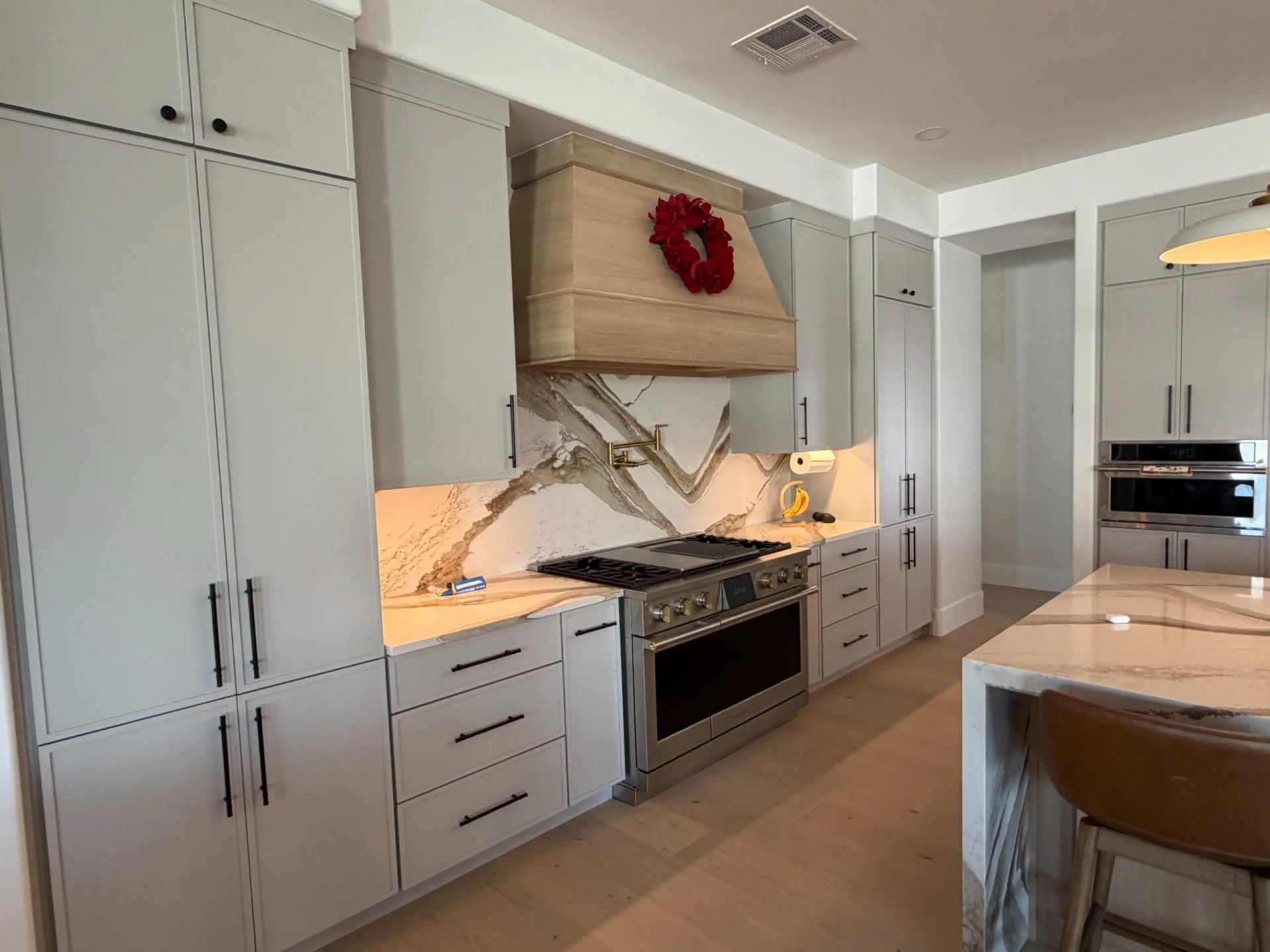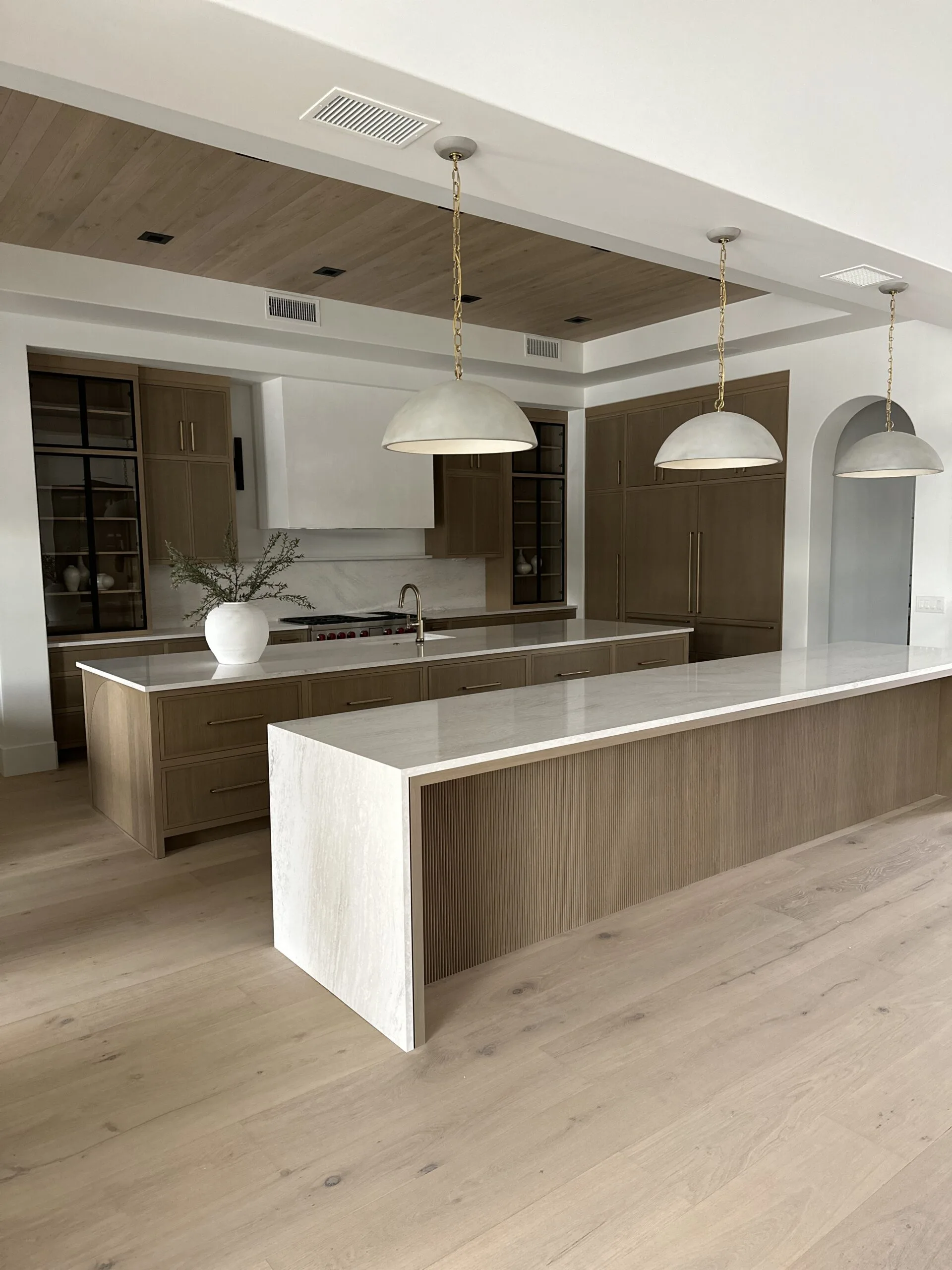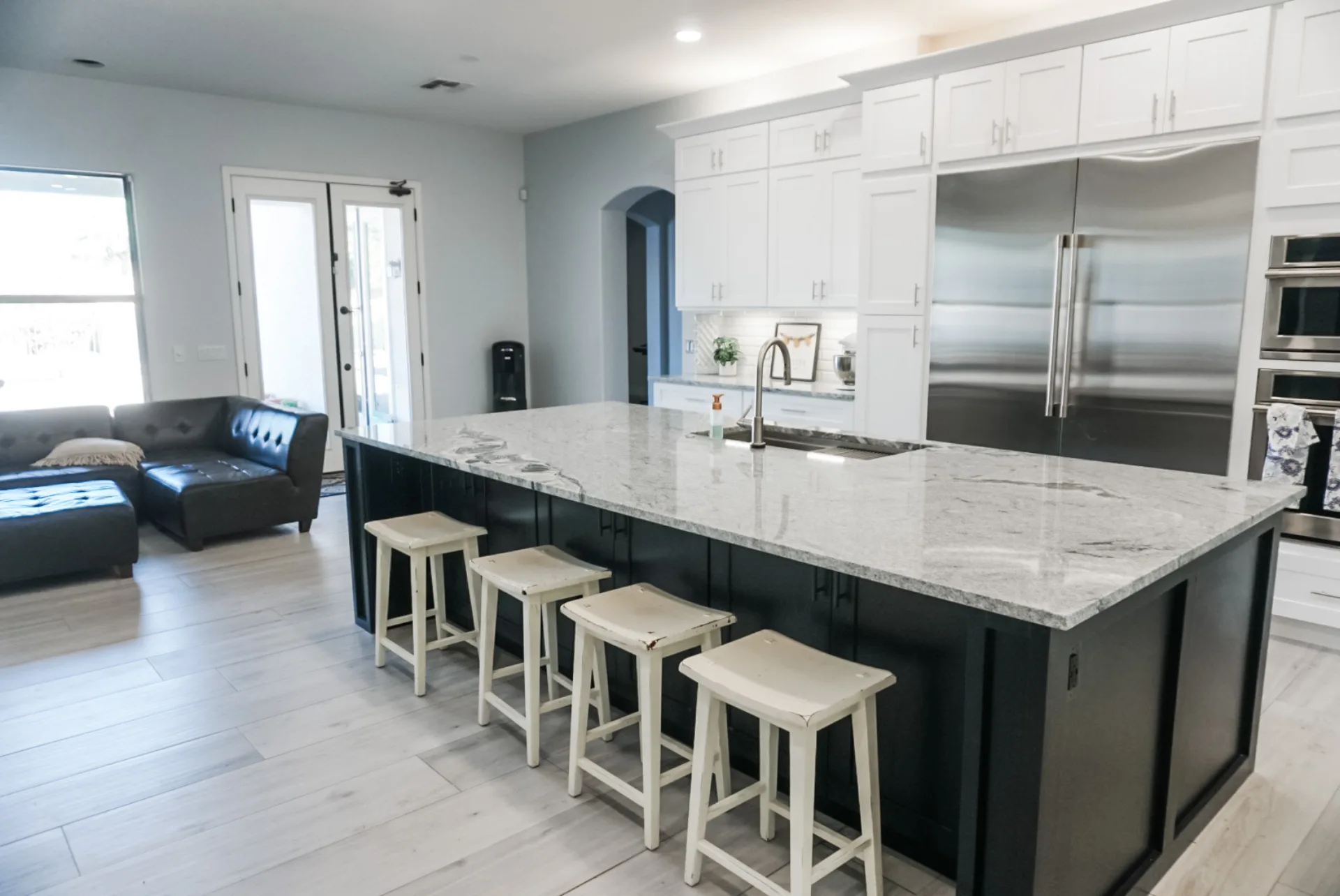

Both models can produce a beautiful finished home. The difference is in how decisions get made along the way, who is accountable when something goes wrong, and how early pricing reality enters the design conversation.
How A Bid-Build Firm Structures A Project
In a bid-build arrangement, a homeowner hires an architect or designer to complete drawings, then sends those finished drawings to multiple general contractors for competing bids. The lowest or best-fit bid wins the work, and the contractor builds from documents they had no part in creating.
This structure keeps the design and construction relationships separate and independently priced. It works cleanly when the scope is well defined and the design does not depend on close coordination with construction sequencing.
How A Design-Build Firm Structures A Project
A design-build firm carries design and construction under one roof, with one contract and one team accountable for both. The builder is part of the conversation while the design is still being developed, not brought in after it is finished.
That structure lets budget, structure, and schedule inform the design continuously, rather than being checked once at the bidding stage. It is the approach behind our own interior design process, where design decisions and construction feasibility are reviewed together.
Where Pricing Enters The Process
The timing of pricing is one of the clearest practical differences between the two models. In bid-build, pricing arrives after the design is complete, which means the homeowner learns whether the design fits the budget only once major decisions are locked in.
- Bid-build: pricing is set once, near the end of design, from finished drawings
- Design-build: pricing evolves alongside design, with checkpoints at each phase
- Bid-build: cost surprises typically surface as one large adjustment
- Design-build: cost adjustments are smaller and caught earlier, while design is still flexible
Accountability When Something Goes Wrong
Every long project runs into a moment where something needs to change, whether an unexpected structural condition or a homeowner's evolving preferences. How that moment gets handled depends heavily on who is accountable.
In bid-build, the architect and contractor are separate businesses, and a homeowner can end up mediating between them when responsibility is unclear. In design-build, one firm owns the outcome, which tends to shorten the conversation from assigning blame to identifying a fix.
Communication Patterns Under Each Model
Bid-build homeowners typically receive updates from two separate sources on two separate schedules, and reconciling them falls to the homeowner. Design-build teams reconcile design and construction updates internally before anything reaches the homeowner, which is closely tied to why communication structure matters on a long project.
Neither pattern is inherently better for every homeowner, but the design-build pattern tends to reduce the coordination burden that otherwise falls on the client.
Design Flexibility During Construction
Homeowners often want to adjust a detail once they see it framed or roughed in, and how easily that happens depends on the model. Under bid-build, a mid-construction design change usually means a change order negotiation between two separate businesses, each protecting its own scope.
Under design-build, the same change is evaluated by one team that already understands both the design intent and the construction sequence, which typically produces a faster and more transparent answer.
Which Homeowners Tend To Prefer Bid-Build
Bid-build suits homeowners with a finished, unambiguous design, a long-standing relationship with a specific architect, and a scope simple enough that construction coordination is not a major variable. Straightforward additions and cosmetic remodels often fall into this category.
Which Homeowners Tend To Prefer Design-Build
Design-build suits homeowners planning a custom home, a whole home renovation, or any project where structure, mechanical systems, and finishes are closely interdependent. Complexity is the deciding factor more than budget size, since even a modest project can involve significant coordination if the scope touches structure.
- New custom home construction on a raw or challenging lot
- Whole home renovations touching structure, mechanical, and finishes together
- Projects where the interior design and architecture need to evolve together
Families across Chandler, Gilbert, and Scottsdale tend to land in this second group once a project reaches a certain scope, which is why design-build has become the more common structure for luxury work in the Valley.
Interior Design Under Each Model
Interior design decisions depend on framing, electrical rough-in, and millwork backing that all happen early in construction, which means the designer needs a seat at the table on the same schedule as the builder. Under bid-build, interior design is often contracted separately again, adding a third party to coordinate rather than two.
Hybrid Approaches Homeowners Should Know About
Some homeowners start with an independent architect and later bring in a design-build firm to manage construction and interior design together. This can work well if the builder is invited in before drawings are finalized, since the goal is still to check buildability and budget while changes remain inexpensive.
Scope Changes Mid-Project
Every long project encounters a moment where the homeowner wants to adjust scope, whether adding a room or changing a finish package after seeing early construction. Design-build teams can price and sequence that change internally within days, while bid-build often requires a formal negotiation between two separate contracts before work can proceed.
Making The Decision For Your Project
The right question is not which model is better in general, it is which model matches the complexity and pace of the specific project. A homeowner who values predictability, a single point of accountability, and continuous budget feedback usually finds design-build the more comfortable fit.
Reviewing the services a firm offers under each model, and asking directly how design and construction communicate internally, is the clearest way to understand which structure a specific project needs.