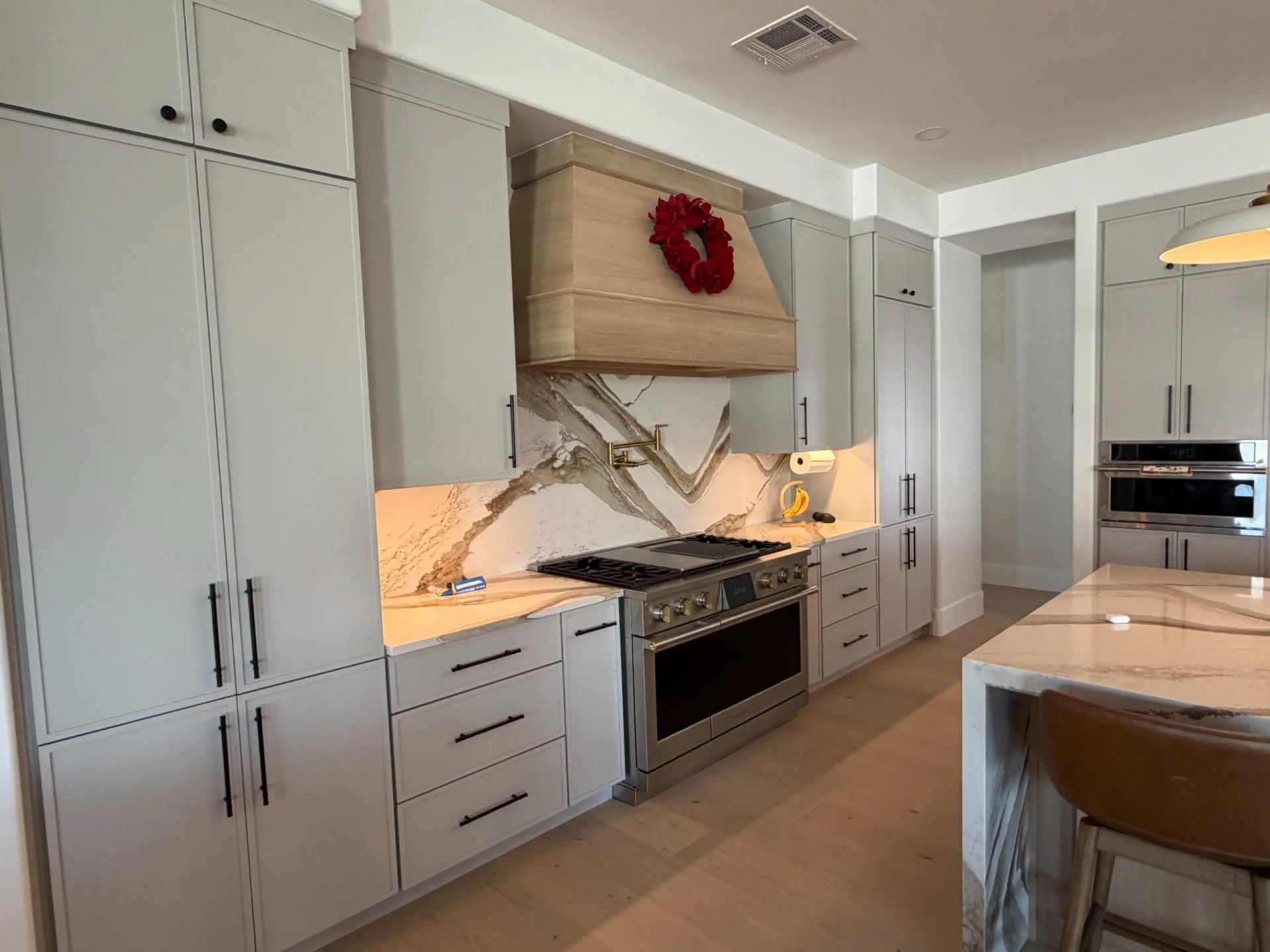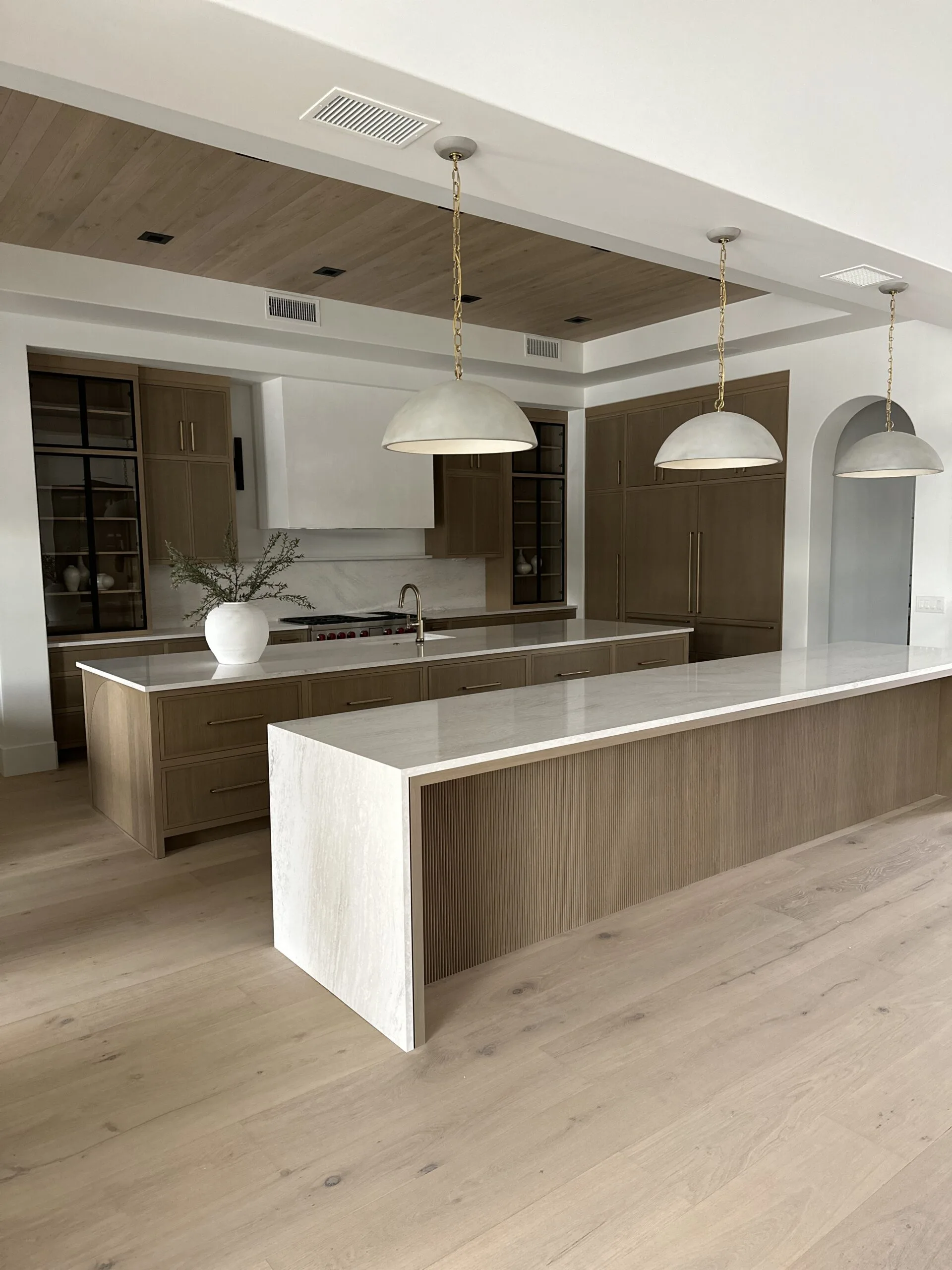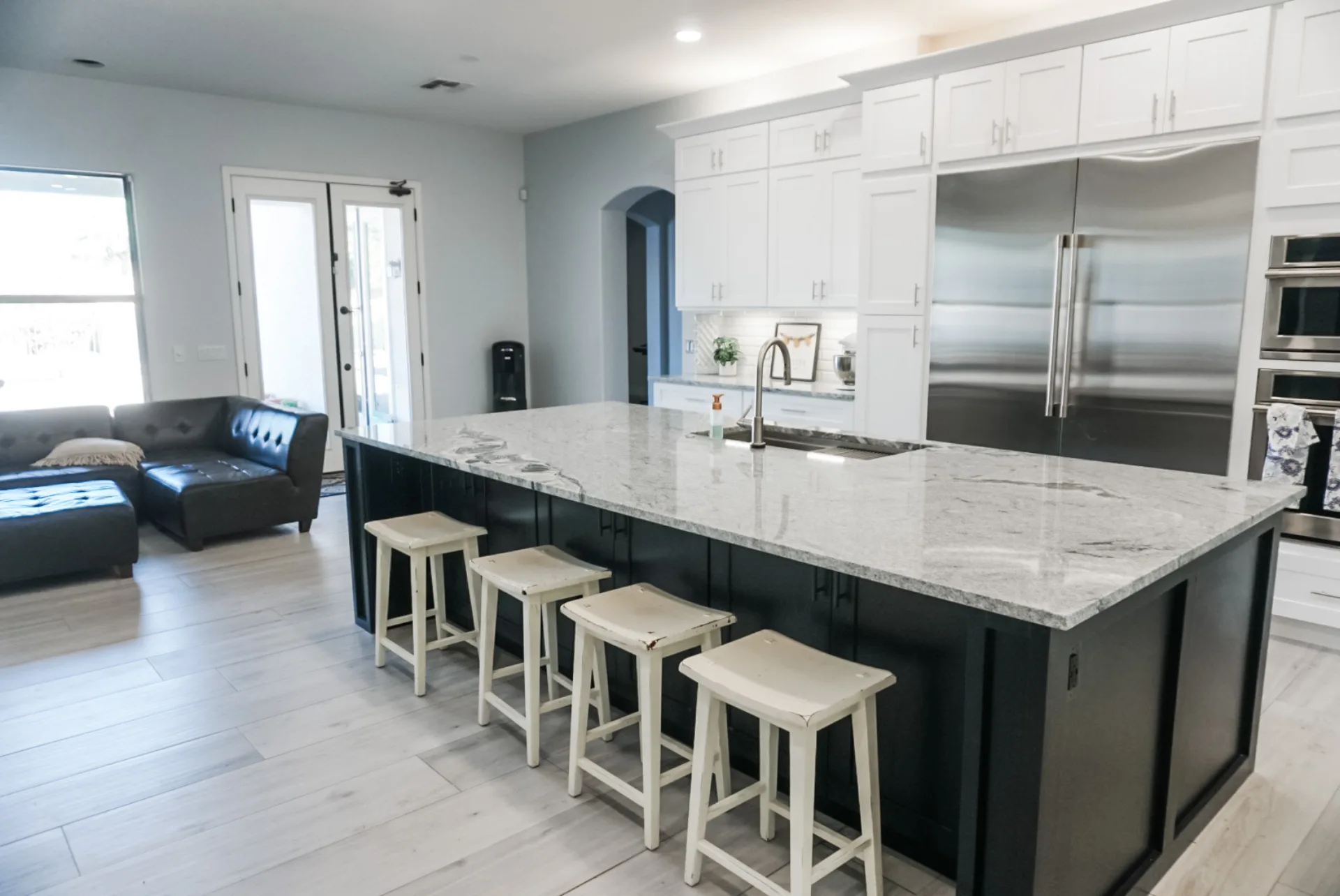
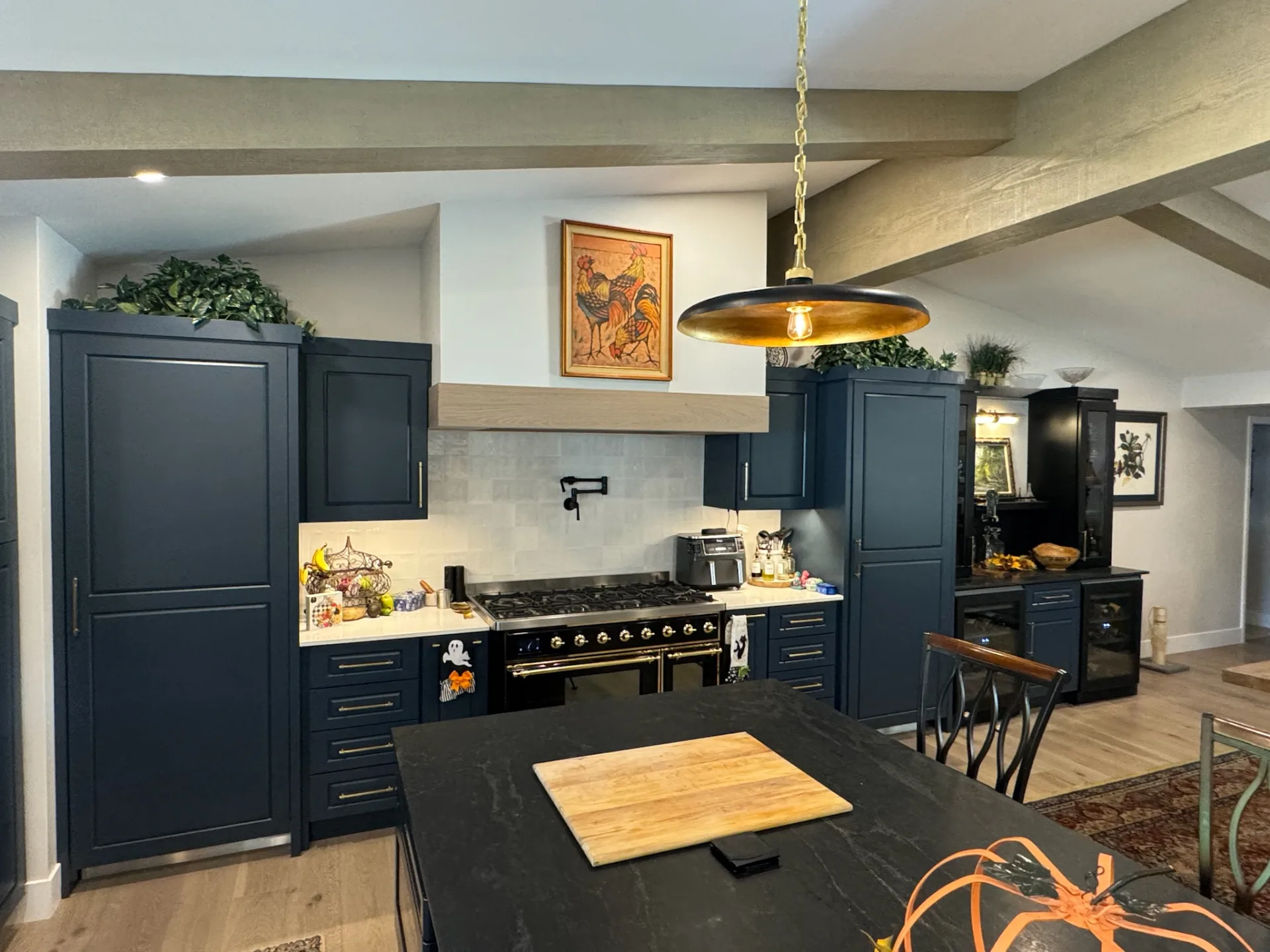
Ask a room full of homeowners what makes a kitchen luxurious and the answers will circle around the visible things. Appliance brand, countertop color, cabinet finish. Ask the same question of a room full of experienced builders and the list changes. Cabinet box construction, drawer glide quality, stone fabrication tolerances, layered lighting, and the trim work no one notices until it is wrong.
Only one of those lists predicts whether the kitchen still feels right a decade after the last trade left the site. This guide explains how the major parts of a luxury kitchen work together and which early decisions protect the finished room.
Cabinetry Shapes How The Room Works
Cabinetry carries much of the daily function in a luxury kitchen, and it is also where some of the widest quality differences live. Two cabinet packages with identical door styles and finishes can perform very differently based on what is happening behind the door.
What separates a top tier cabinetry package from a mid tier one usually comes down to a handful of details:
- Solid wood dovetailed drawer boxes rather than particleboard construction
- Plywood or hardwood cases rather than melamine over particleboard
- Integrated soft close on every drawer and door as standard rather than as an upgrade
- Custom depths and heights sized to the room rather than to a catalog
- A shop that fabricates and installs against actual field dimensions rather than nominal ones
None of that changes how the kitchen photographs. It changes how the kitchen lives ten years in, when the drawers still glide, the doors still align, and the boxes have not sagged.
Stone And Countertops Require A Fabrication Plan
Stone decisions extend well beyond choosing a slab. Fabrication complexity, edge profile, seam locations, thickness, and installation access all affect how the material will look and perform in the finished room.
A book matched quartzite island with a mitered waterfall edge is a completely different project from the same island detailed in a straightforward eased edge, even when both are cut from the same slab. The mistake we see most often is a family choosing a slab in the warehouse because it is beautiful there, then finding out at install that the veining does not fall the way they pictured, or the seam has to land in the middle of the sink.
Good stone selection happens with the cabinetry drawings in hand, not in isolation. That is why our interior design team is in the slab yard with the family, and always with the elevations rolled up under one arm.
Appliances Should Follow Daily Routines
The appliance package should reflect how the household cooks and entertains. An oversized range, integrated column refrigeration, two dishwashers, a steam oven, a warming drawer, and a wine tower may be useful for one family and unnecessary for another.
If the family cooks that way, the investment earns its keep. If they cook a few nights a week and entertain occasionally, a large portion of that hardware never gets used. The better question is not which brand. It is which pieces match how the household lives, and which are catalog defaults chosen to fill the elevation.
A thoughtful selection often costs less than a maximal one and produces a kitchen that works harder every day.
Lighting: The Single Biggest Gap Between Photograph And Reality
Lighting is the single biggest gap between a kitchen that photographs well and a kitchen that feels good to live in. Luxury kitchens run three layers, and each one deserves its own attention:
- Ambient. Recessed downlights, coves, and any indirect illumination that sets the base level for the room
- Task. Undercabinet lighting, illumination over the island, and dedicated task light over the range
- Accent. Interior cabinet lighting, toe kick lighting, and decorative pendants that carry the design language
Each layer belongs on its own dimming circuit, and fixture selections happen with a reflected ceiling plan in hand rather than from a showroom wall. The line item is modest compared to cabinetry and stone. The impact on how the room feels at seven in the morning and again at nine at night is disproportionate to the cost.
This is one of the clearest places an interior designer earns her fee back on a luxury project. The reflected ceiling plan, the dimming protocol, and the fixture specification are all worked out during design rather than called in from the field.
The Small Details Shape Daily Use
A luxury kitchen is defined by details that are easy to overlook on an early drawing. The choices that separate a kitchen that photographs well from one that lives well include:
- Panel ready appliance integration with cabinetry fronts that align across the run
- Custom vent hood liners that read as architecture rather than as appliances
- Hidden outlets under upper cabinets and inside drawer interiors
- Toe kick heaters where the climate and the layout make them worth the effort
- Undermount sinks fabricated to the exact thickness of the stone
- Interior drawer organization built to the way the family cooks
None of these details happen on projects where design and construction are working from different drawings. Inside an integrated design-build process, the cabinetry shop, the tile setter, the electrician, and the appliance installer coordinate against one set of documents held by the same team.
Where Early Planning Has The Most Impact
In luxury kitchens across Chandler, Scottsdale, and Paradise Valley, the strongest results begin with cabinetry construction, lighting design, and an appliance plan tied to the household's routines.
That trade off is not about being frugal. It is about spending in the places that reward the family every morning for the next twenty years, rather than the places that reward them for the first photograph.
The Bottom Line
A luxury kitchen is a connected set of choices rather than a collection of finishes. The homes that get it right prioritize the categories that shape how the room lives, and they let design lead selections rather than the other way around.
That is exactly why our interior design process starts in the room, with the family, long before a single finish gets picked.